Need help?

1717 Helpline

112 in emergencies

National security

False and misleading information is frequently used to influence public opinion and decision-making in democracies

Information disorder can undermine people's ability to make informed decisions. It is important to be able to distinguish between reliable information and that which is misleading or false.

It is also necessary to be able to spot the tactics often used to shape or mislead public discourse and respond appropriately. Critical thinking and media literacy are among our strongest defenses against information disorder.

This page is designed to help you recognize the risks, understand how they appear, and know what you can do when we encounter them.

Recognize the risks, understand how they appear, learn how to respond, and report unusual incidents!

Click here to report an incident
Misinformation

When discussing information disorder, three categories of information are generally referred to: 

Disinformation: False or untrue information spread with the intent to cause harm (disinformation). 

Misinformation: False or untrue information spread without the intent to cause harm (misinformation). 

Malinformation: Accurate or true information spread with the intent to cause harm (malinformation). 

Stop – and pause

  • When we come across something shocking, unbelievable, or questionable. Wait a moment before sharing.

Think

  • Who is posting this?
  • Why?
  • What sources are used?
  • Is the full story being told, or is the content taken out of context?
  • Is there an attempt to evoke strong emotions, such as anger or fear?

Let's check

  • Are others discussing the topic, such as professional news outlets?
  • Search engine results or fact-checking.
  • Is the image real and what is its origin?
  • Who is behind the account or the platform publishing the content?

Let's take an extra step when in doubt!

Information disorder can appear in various ways, but it can disrupt informed public debate, promote polarization, and affect public trust in professional media, experts, or democratic processes. 

Disinformation is intentionally designed to deceive people, undermine trust, foster suspicion, or promote a specific agenda. It can be part of coordinated campaigns, often originating from abroad, aimed at influencing public discourse, elections, attitudes toward public issues, or trust in democratic institutions. 

Misinformation, on the other hand, is spread without the sharer having malicious intent. People sometimes share incorrect information because it seems believable, confirms what they already believe to be true, or triggers a strong emotional response. Although the intent may not be harmful, the consequences can be serious, especially if the information spreads quickly and widely. 

Malinformation is of a different nature. It does not necessarily involve spreading falsehoods, but rather true information that is presented or published with the intent to harm individuals, groups, or public discourse. Examples of this can be information taken out of context, published in a misleading way, or used to promote fear, suspicion, or conflict. 

Critical thinking and media literacy are key when it comes to analyzing the information we see online. By pausing and considering where information comes from, whether sources are reliable, or whether content is presented in the right context, we can better protect ourselves against information disorder and promote a more trustworthy public debate.  

Artificial intelligence

Let's keep the following in mind when using artificial intelligence to search for information:
 
  • Artificial intelligence can provide incorrect and misleading information. Let's take AI responses with a grain of salt and evaluate them critically.


  • Let's ask the artificial intelligence to cite the sources it bases its answers on and then check whether those sources are reliable.


  • AI responses are largely determined by how we phrase our questions and what context we provide. If our questions are not neutral, the answer is likely not to be neutral either.


  • Let's remember that AI responses are shaped, among other things, by how the creators trained the system. Be aware of who is behind the AI model we use.


  • Let's remember that the answers we get from AI depend heavily on the model we use. For example, the quality of answers is usually lower when using free AI compared to paid AI.


  • Be aware that malicious actors can intentionally publish false or misleading information online in the hope that AI will use it when answering questions.

AI models are trained on large datasets before they are made available to users.
How these models are trained has a big impact on how they answer our questions. Therefore, it is important that we consider who is behind the AI model we use.
 
AI models also base their answers on information available online.
Online, you can find both reliable and correct information, as well as false and misleading information. AI can base its answers on either, so there is a risk that it sometimes provides answers based on misleading information.
 
This also creates the risk that malicious actors intentionally publish false or misleading information online in the hope that AI will use it when answering questions.
 
We can respond to this by:
Asking the AI to cite the sources it bases its answers on and then checking whether those sources are reliable.

Glossary

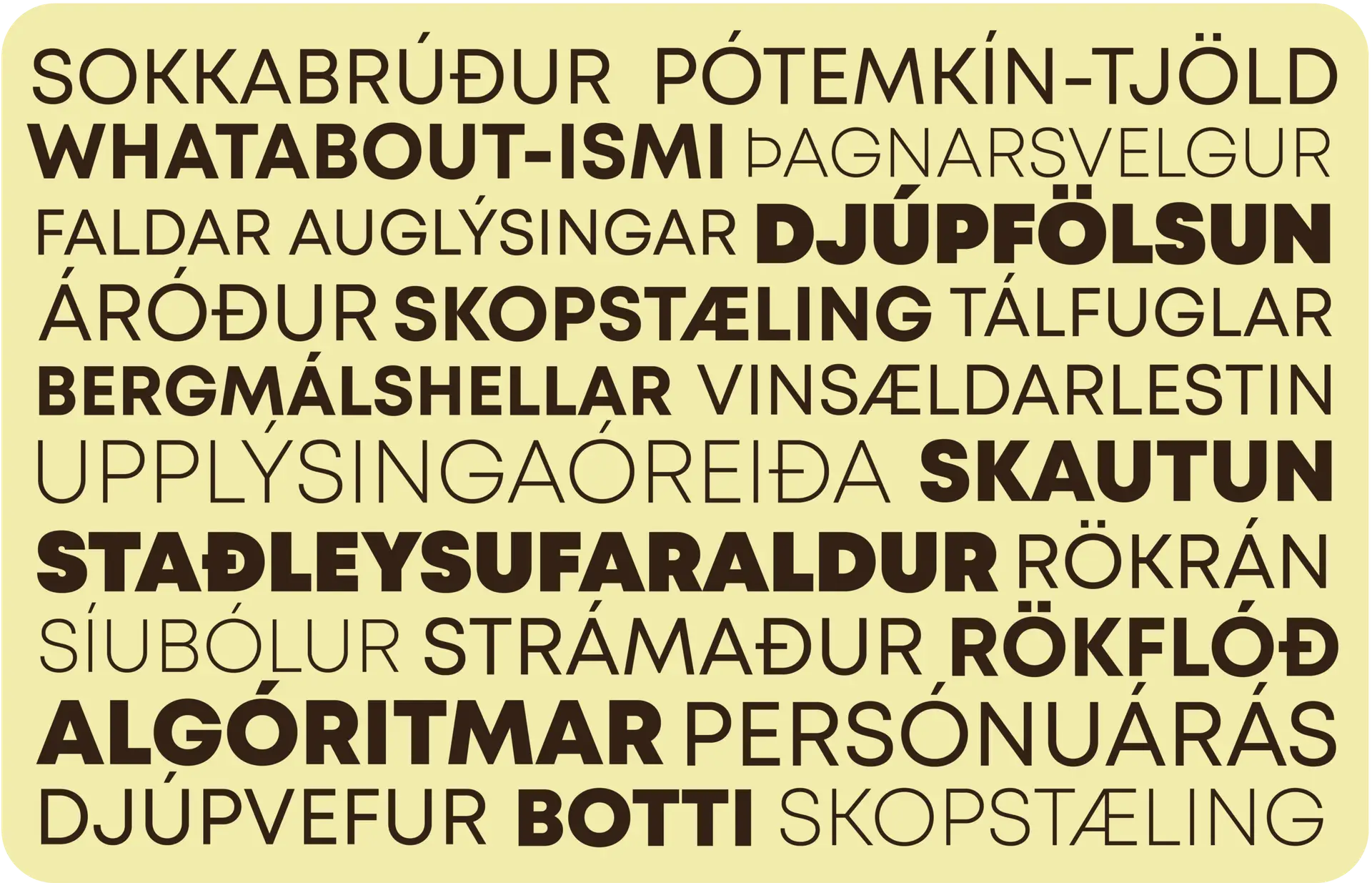
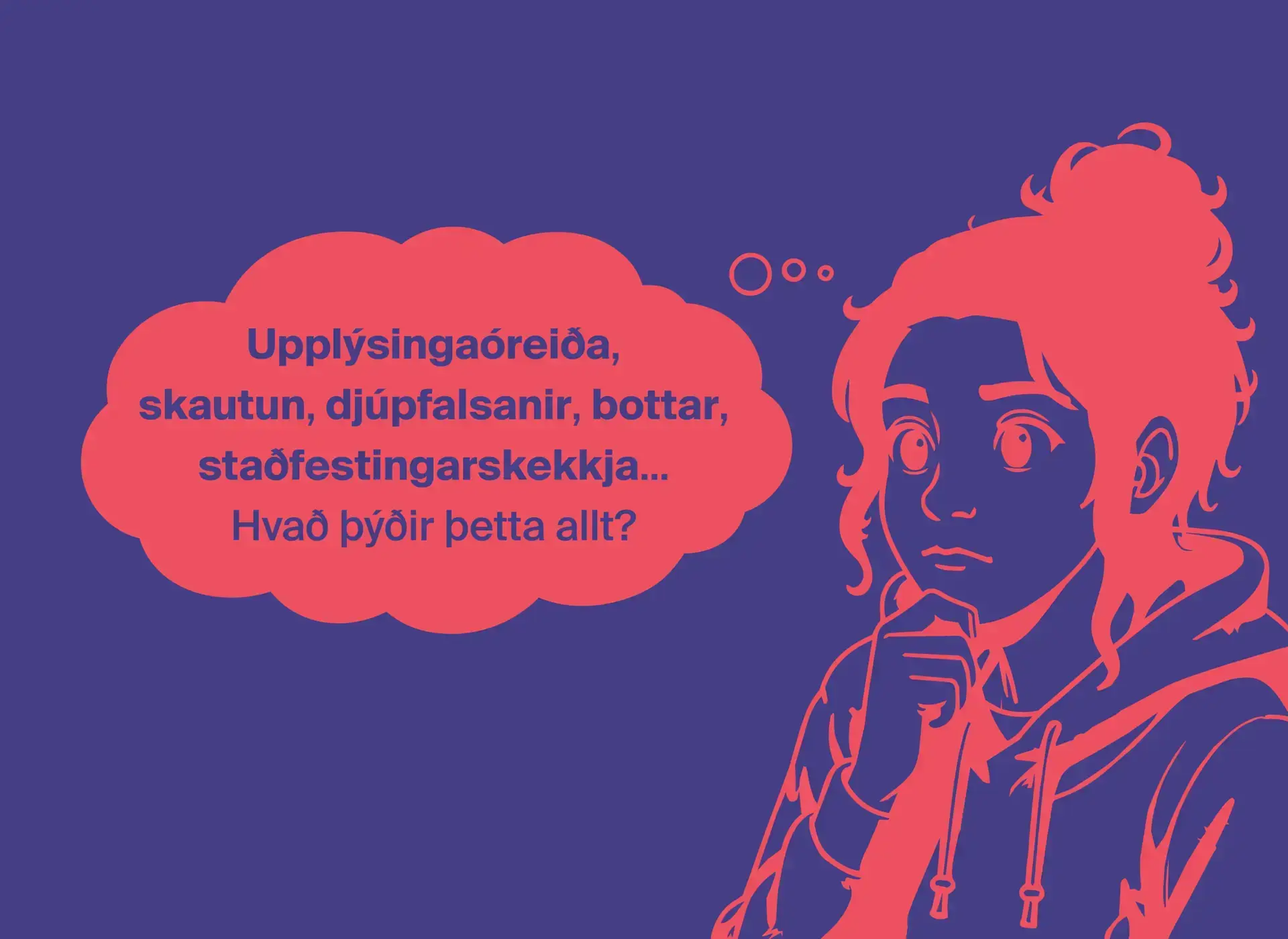
Echo chamber, whataboutism, straw man, filter bubbles, and Potemkin villages...

Do you know these terms?

Here you will find a dictionary with some useful terms related to the online world:

Glossary

Ad Library

Information about ads appearing on social media can be accessed through ad libraries (e.g., Ad Library). For example, Meta and TikTok maintain such ad libraries.

Among other things, you can look up 

  • Specific ads that are currently running 
  • An overview of ads purchased by specific entities 
  • Information about the target audience of an ad and the scope of its reach
 

Ad libraries are available to everyone free of charge and are designed to increase transparency about who is behind the ads we see on social media. We can use ad libraries as a tool to help identify why certain ads are shown to us.

Have you encountered unusual incidents online?

Have you noticed?

  • Information chaos
  • Bottom
  • The Deep Valleys

Let us know!

You can report disinformation, bots and deepfakes here on the site or by sending us a line at töötning@netvis.is .

You can send screenshots or other documents by selecting "Choose files."

It is not necessary to provide a name when making a report. If a reporter chooses to provide their name, Netvís and the Icelandic Media Commission cannot grant anonymity to those who submit a report to Netvís about an alleged violation of the law. However, anonymity means that Netvís cannot follow up on the case by obtaining further information from the reporter .
Netvís which is under the responsibility of the Media Commission, is the controller of personal data processing carried out by Netvís . All processing of personal data is carried out in accordance with applicable laws on privacy and the processing of personal data at any given time. See the Media Commission's privacy policy here .

We have received the message!

Report Netvís on democracy and polarization

Search on Netvís .is

Would you like to receive the latest news and educational material?

Fill out the form with your information and we will contact you as soon as possible.

Inquiry about education

Fill out the form with your information and we will contact you as soon as possible.

Fields marked with an asterisk* are required.

We have received your request!

Deep counterfeiting 

Deepfakes are content created or altered using artificial intelligence so that images, audio, or video appear to depict real people or events, even though the content is partially or entirely fabricated or faked.

Deepfakes can be considered misinformation or misinformation and thus have a negative impact on social debate and public opinion formation.   

Deepfakes can be used by those who want to influence public discourse and our opinions to misrepresent reality. The technology can make it appear that something has happened that never did. Deepfakes are particularly dangerous now because of how credible they are and how quickly they can spread on social media.  

Deepfakes can undermine trust in facts, public debate, and negatively influence public opinion. Deepfakes can also be targeted at individuals and used to blackmail, harass, or damage their reputations.  

However, the technology is not always harmful in itself. Deepfakes can be used creatively, for example in the production of entertainment or for educational purposes. The problem arises primarily when deepfakes are used to deceive people, mislead the public, or when it is not clear that the content is fake or has been altered. 

Therefore, it is important to approach “shocking”, controversial or emotional content with a critical eye. It is good to pause before sharing the content, to examine where it comes from, what the context is. It is good to seek confirmation from reliable sources and consider whether the goal is to deceive.

Content generated by artificial intelligence is often specially marked. Let's look for markings.

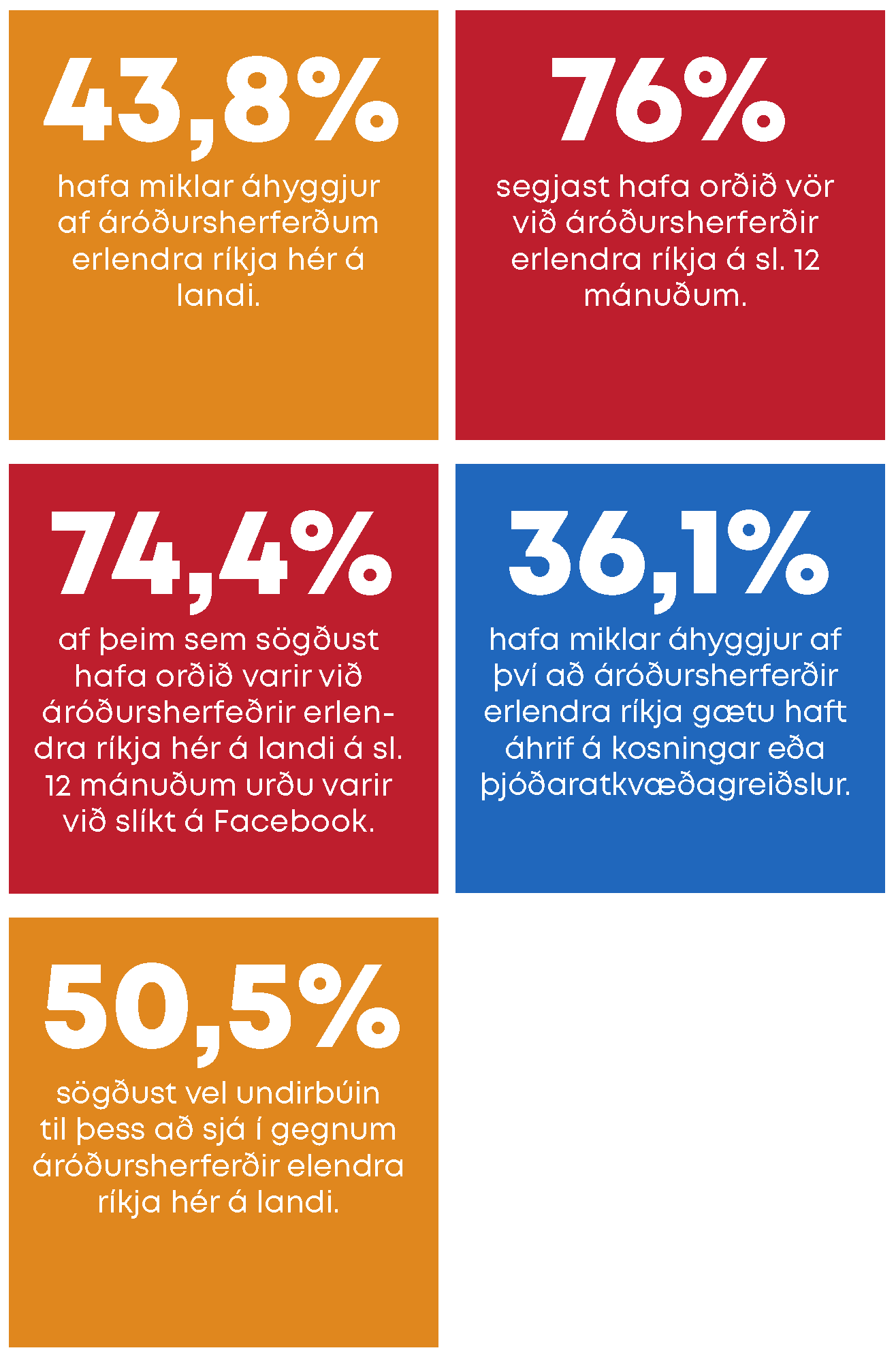
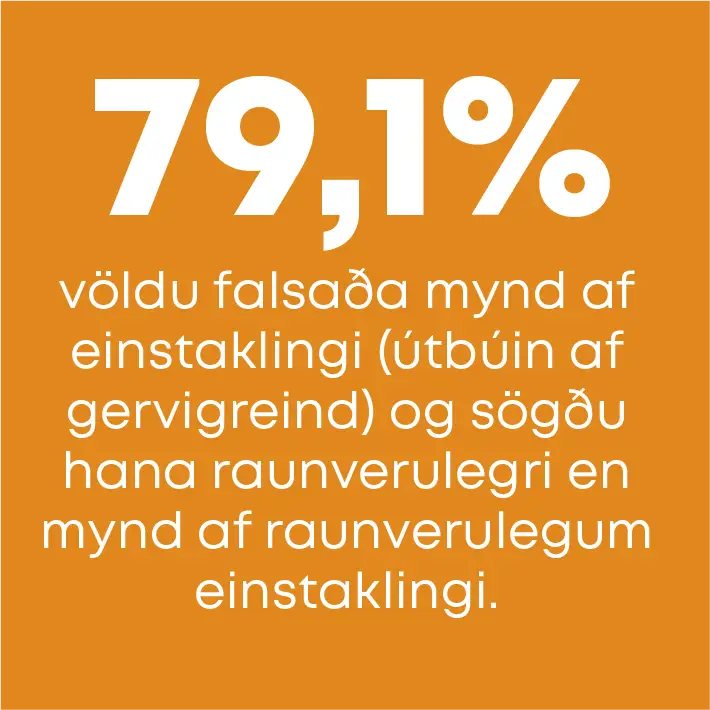
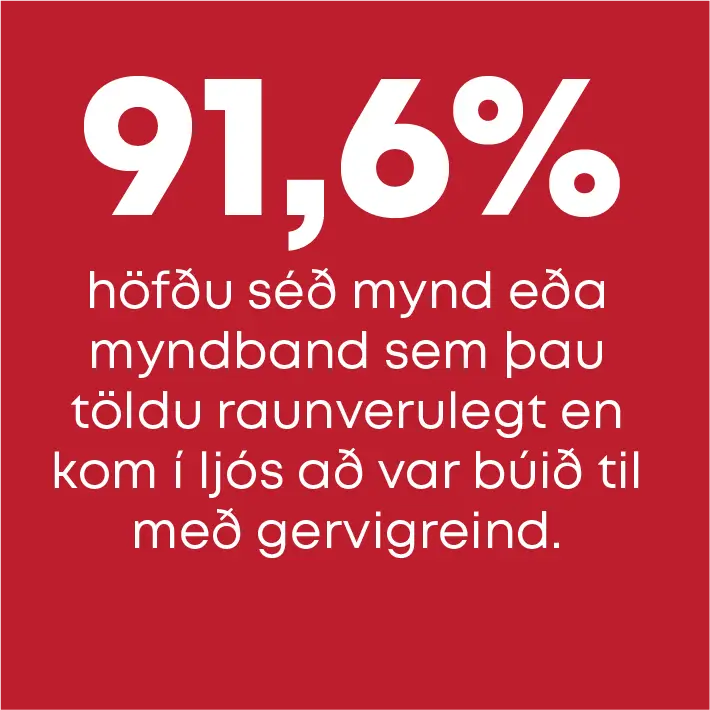
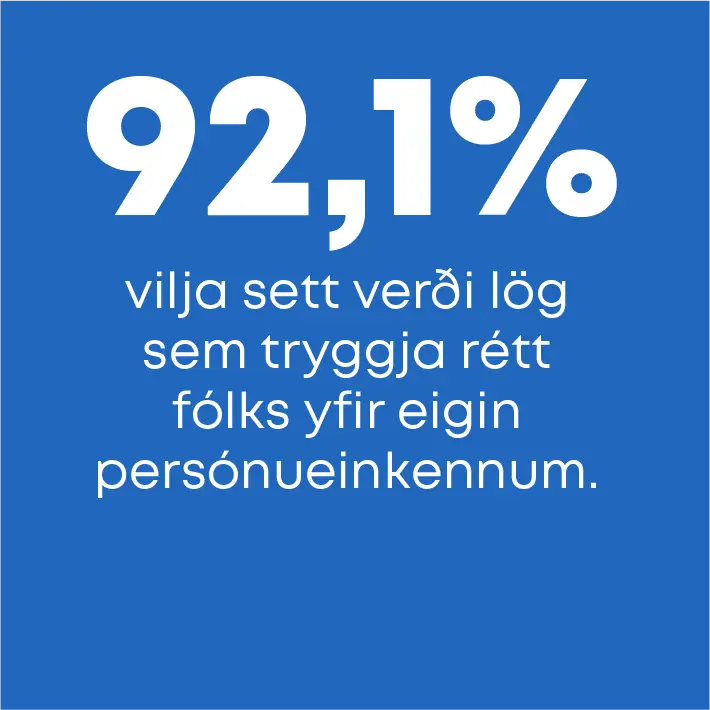
Democracy and Polarization: People's Experiences of Propaganda and Attitudes to Different Groups – Results of a Maskína Survey for the Media Committee and Netvís November 2025.

Be alert to the deep fakes

Stop - We pause when we encounter something shocking, unbelievable, or questionable.  

Think - Is the content credible?
Who shares it and why?
Is there an attempt to evoke strong emotions, such as anger or fear?

Check - Check if others are discussing the topic, for example professional legal media.
Let's check the owner of the media /access sharing the content.
Let's check the search engine results and fact checks.

Let's study the material carefully.
Sometimes you can identify clues such as suspicious and random lighting, hair or jewelry that doesn't blend well into the image, or unusually smooth skin. Rhythm can be odd, and lips sometimes don't follow speech.

Content generated by artificial intelligence is often specifically marked. Let's look for tags .

Various tools 
Deepfake detection tools
Reverse image search 
Fact-checking 

Bots

An automated computer program that pretends to be a human online.

Bots can:
- Create and spread posts.
- Write comments.
- "Like" content.
- Send and reply to messages in messaging apps.
Bots are sometimes used to shape public debate and influence our opinions. The goal is often to promote or discourage support for certain views, political parties, or movements. Behind the bots may be individuals, groups, organizations, or other forces wishing to influence our views, especially in the lead-up to elections. 

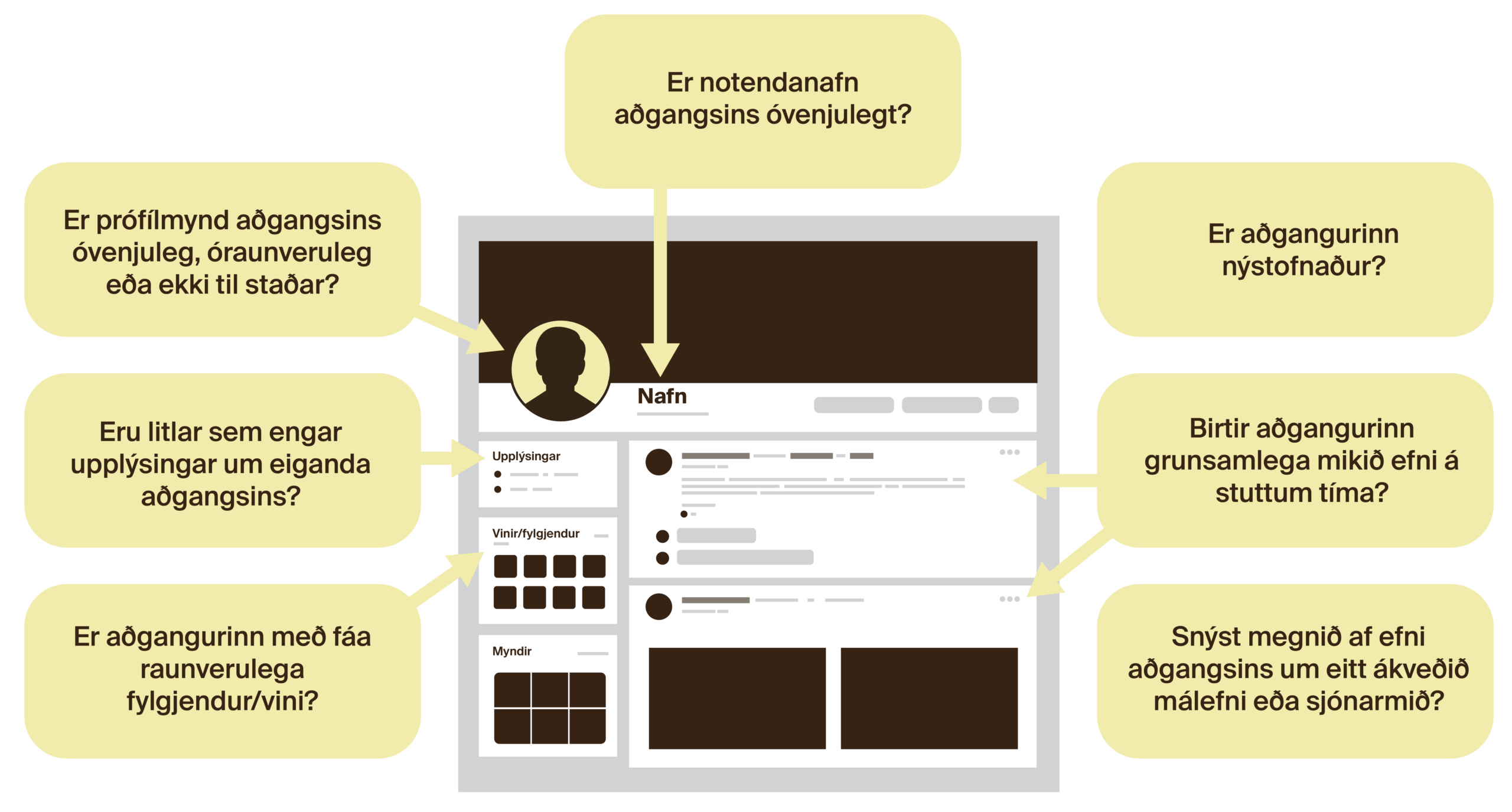
Spot a bot

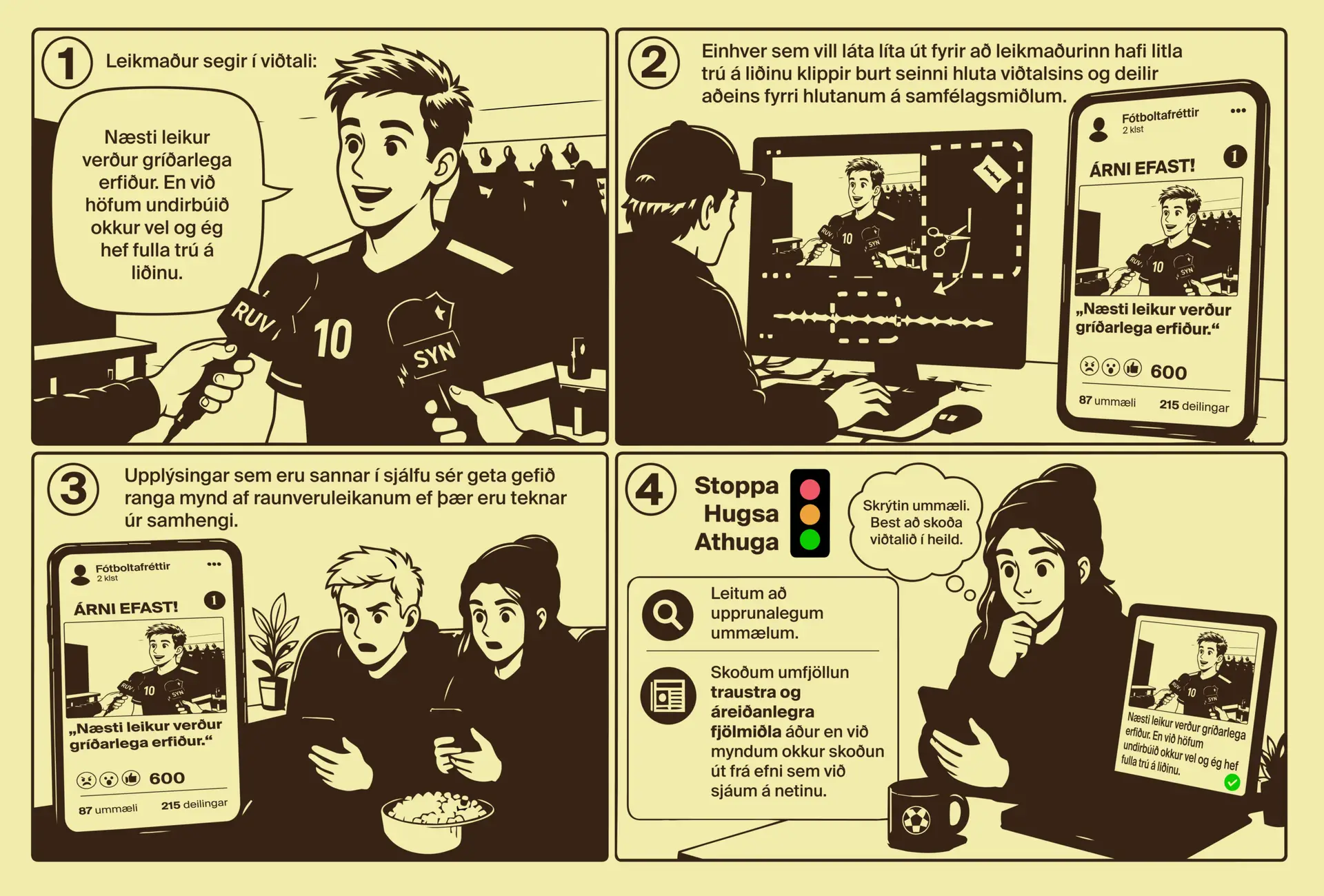
Content taken out of context

Sometimes misinformation relies on real comments, images, or facts taken out of context to influence our views. This means that information that is true in itself can give a misleading picture of what actually happened.

This can take various forms, such as:

  • creating a misleading picture of reality by showing only part of a photograph or quote.
  • generalizing from one person's opinion and attributing it to their entire group.
  • presenting numbers or data in a way that gives a false or misleading picture of reality.

Let's stay alert to content taken out of context

  • It is a good idea to look for original statements and check coverage from trusted and reliable media before forming an opinion based on content we see online.
  • Before forming an opinion about an entire group, check whether the comments or actions of a single individual truly reflect the group as a whole.  

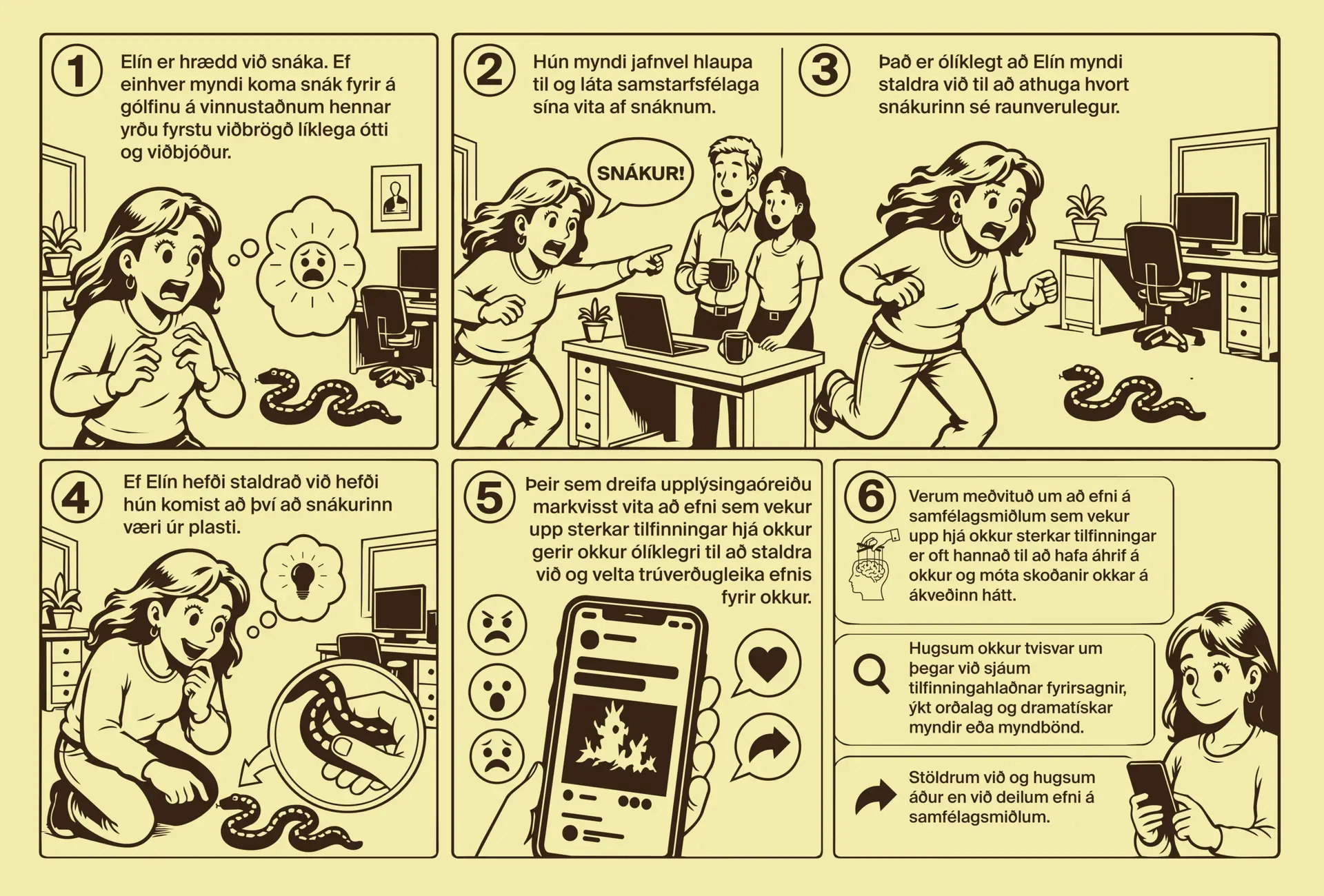
Playing on emotions

When misinformation is spread to influence opinions, emotionally charged content is often used, as it frequently captures our attention better than neutral facts.

Content that evokes strong emotions, such as anger or fear, can reduce critical thinking. As a result, it can increase the likelihood that we will believe questionable information and that we will click on, like, or share posts on social media without really thinking.

It is normal for content we encounter online to evoke emotions in us. However, we need to be aware that malicious actors can exploit this for their own benefit by spreading falsehoods and thereby influencing public debate.

Let's watch out for emotional manipulation

  • Let's be aware that social media content that evokes strong emotions in us is sometimes designed to shape our opinions in a certain way. 
  • Let's pause when we see emotionally charged headlines, images, or videos, or exaggerated wording.
  • Let's pause before sharing content on social media. 

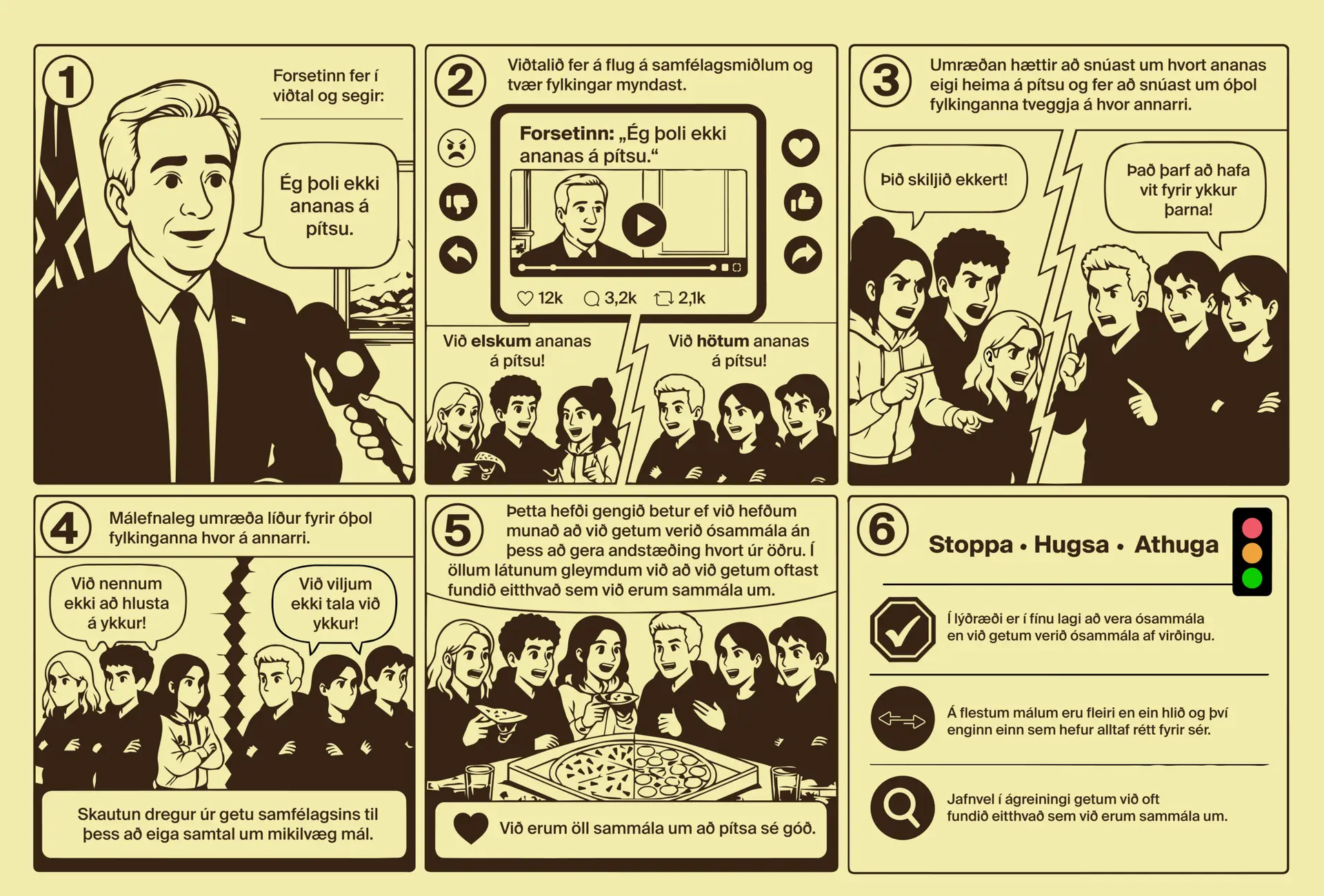
Polarization

Polarization refers to when groups holding opposing views drift further apart from each other, which further increases the hostility between them. 

Misinformation can fuel polarization by amplifying disagreement, distrust, and anger. False, misleading, or out-of-context information can reinforce the feeling that society is divided into opposing camps: "us" and "them". When this happens, it becomes harder to discuss issues calmly and easier to view those who disagree as enemies rather than participants in a shared democratic debate.

Hostile foreign states and interested parties can benefit from undermining trust and solidarity in democracies. The goal is then not necessarily to convince people to embrace certain views over others, but rather to create chaos, mistrust, and division. Such operations often take place on social media, where fake accounts and coordinated content distribution are used to amplify conflict and promote negative attitudes between groups.

Where trust and solidarity are low within communities, misinformation can spread faster and wider. Once the social fabric has been torn, it is easier to spread false and questionable information that elevates certain groups while dragging others down.

To counter this, it is important to foster critical thinking and media literacy. We must not forget that in strong democracies, people debate differing viewpoints in a calm manner built on trust and respect.

Therefore, much is to be gained by maintaining trust and cohesion within society.

Watch out for polarization

Stop - Pause when we encounter something "shocking", unbelievable, or questionable

Think - Is this trying to provoke a reaction in me, anger or fear towards other groups?

Check - Let's check who is behind the account or media outlet that published the content. Are there hidden motives?

It is okay to disagree. Disagreement is part of democratic debate. 
  • Let's practice disagreeing respectfully.
  • Let's critique issues rather than individuals and groups.
  • Let's consider whether we are seeing the big picture.
  • Let's remember that in disagreements, we can often find something we agree on.

Confirmation Bias

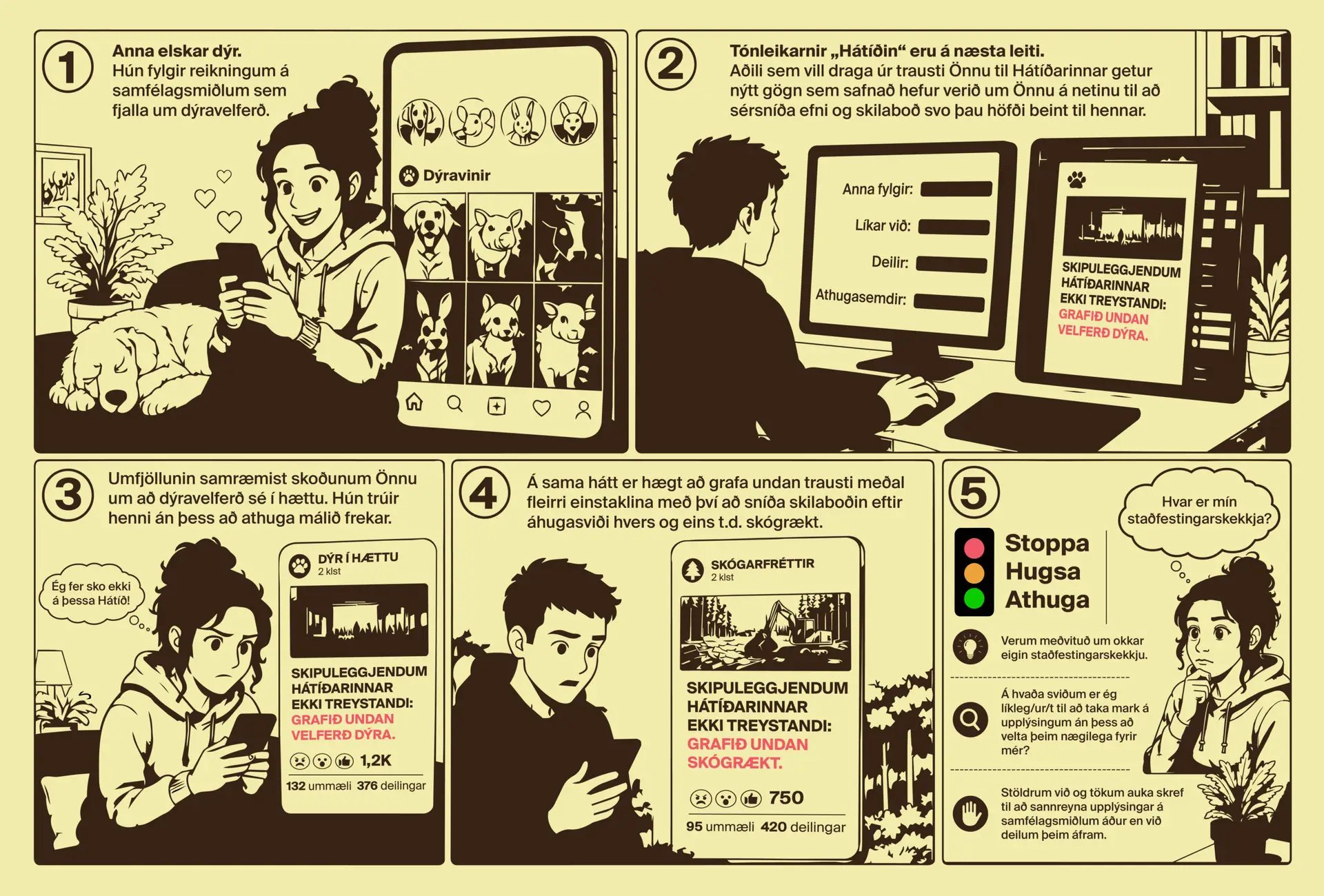
We all have opinions and values that shape how we see the world. When we encounter content online, we are more likely to believe and pay attention to information that aligns with our views and values than information that contradicts them.  Those who spread misinformation know that it is easier to make us believe false or misleading information when it matches what we already believe.  In this way, those who spread misinformation can use information and data collected about us online to tailor content specifically to our views.

Watch out for confirmation bias

In what areas are we most likely to accept information without thinking it through carefully enough?

Let's pause and make sure that information on social media is accurate before we share it further

We use cookies

We use cookies to improve your experience on the website and collect information to improve our content.